Cooling elements have a major influence on the thermal performance and cost of insulated packaging.
THERMOCON develops and supplies cooling elements for different packaging systems — from economical single-use gel packs to robust reusable hard-shell packs, and from water-based cooling elements to PCM with a custom melting point:
Gel pack, Foam Brick, cooling mat or hard-shell pack — as a standard product or a custom design
Single-use or reusable — matched to shipping frequency, return logistics and your cost model
Water-based or PCM-based — depending on the temperature range and risk profile
PCM from approx. -60 °C to +60 °C — with defined or individually specified melting points
For +2 to +8 °C, +15 to +25 °C and -15 to -25 °C — standard PCM for cold, ambient and frozen applications
Modular THERMOCON standard container — suitable for many box sizes, product lines and pre-qualified systems
Cooling elements have a major influence on the thermal performance and cost of insulated packaging.
THERMOCON develops and supplies cooling elements for different packaging systems — from economical single-use gel packs to robust reusable hard-shell packs, and from water-based cooling elements to PCM with a custom melting point:
Gel pack, Foam Brick, cooling mat or hard-shell pack — as a standard product or a custom design
Single-use or reusable — matched to shipping frequency, return logistics and your cost model
Water-based or PCM-based — depending on the temperature range and risk profile
PCM from approx. -60 °C to +60 °C — with defined or individually specified melting points
For +2 to +8 °C, +15 to +25 °C and -15 to -25 °C — standard PCM for cold, ambient and frozen applications
Modular THERMOCON standard container — suitable for many box sizes, product lines and pre-qualified systems
This overview compares designs and cooling media. If you need a defined temperature range, duration and tested pack-out, choose a pre-qualified system.
Selection depends on more than the required transport temperature range. The interaction between the goods, insulated box, pack-out, usage model, process and qualification requirements is crucial.
01
Transport requirements
Transport temperature range
Target range and permitted deviations
Transport duration
Transit time and cooling duration
Ambient temperature profile
Summer, winter, universal or custom
02
Packaging system
Payload
Mass, dimensions and starting temperature
Insulated box
Available space, insulation material and thickness
Pack-out
Number, position and spacing of the cooling elements
03
Process and usage model
Usage
Single-use, reusable or limited reuse
Conditioning
Freezing temperature and duration
Shipping process
Handling, returns, cleaning and interim storage
04
Priorities and evidence
Cost efficiency
Cost per shipment or cycle
Process reliability
Handling, error reduction and thermal margin
Qualification and sustainability
Testing requirements, material use and circularity goals
Cost per unit is not the same as cost per shipment.
Also consider conditioning, handling, failure risk, returns, cleaning and potential reuse.
The complete system matters
Cooling elements depend on a coordinated packaging system
Selection depends on more than the required transport temperature range. The interaction between the goods, insulated box, pack-out, usage model, process and qualification requirements is crucial.
Insulated box and insulation
Cooling element and cooling medium
Stable transport temperature range
Pack-out and conditioning
Transport profile and payload
Whether the goods remain within the required transport temperature range depends on the entire packaging system. THERMOCON specifies the cooling elements, their number, position and conditioning together with the insulated box, pack-out, goods and actual transport conditions.
Melting point is not the transport temperature range
Water-based cooling elements with a melting point of 0 °C and PCM elements with a melting point of +5 °C can both be used for transport at +2 to +8 °C, depending on the pack-out and conditioning.
Select by product group
Select cooling elements by design and application
Compare THERMOCON cooling elements by design, cooling medium, transport temperature range, usage model and typical application.
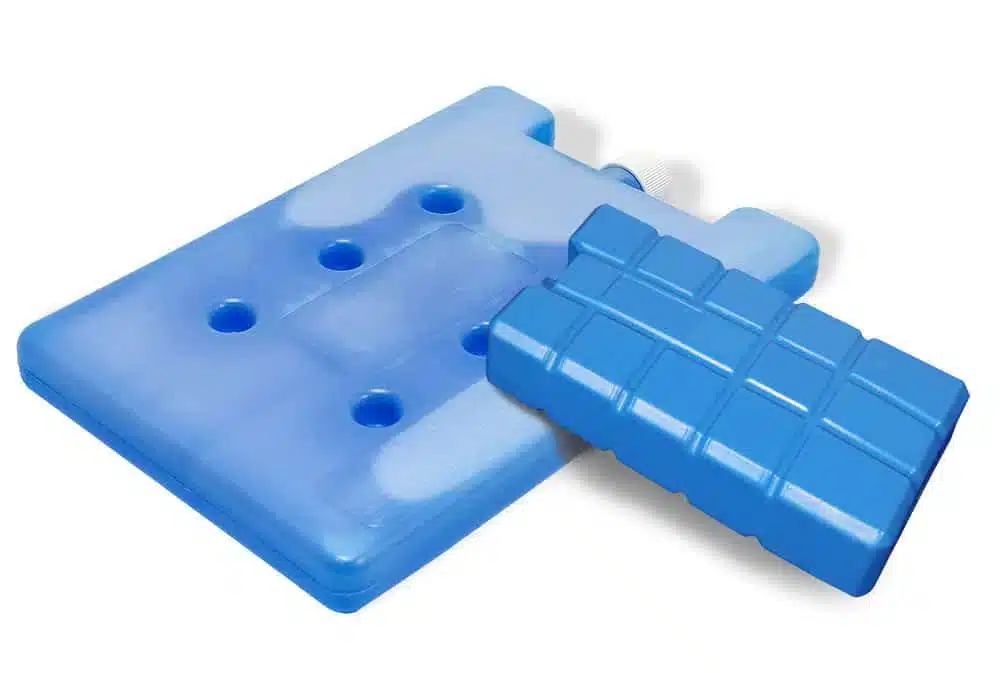
Hard-shell packs are robust cooling elements with a rigid casing. They are particularly suitable for recurring shipping processes, controlled transport lanes and applications where cleaning, durability and standardised handling are important.
Depending on the design, hard-shell packs can contain a water-based or PCM filling. Their geometry, conditioning and position in the pack-out must suit the temperature range and insulated box.
Foam Bricks are cooling elements with a solid foam core. They retain their shape when frozen or partially thawed, allowing precise positioning in the pack-out.
This is particularly useful for standardised packaging systems where repeatable packing processes, defined spacing and a reproducible cooling element arrangement are important.
Typical applications:
standardised pack-outs
pharmaceutical and diagnostic shipping
frozen applications
packing processes with fixed insertion positions
applications requiring repeatable cooling element placement
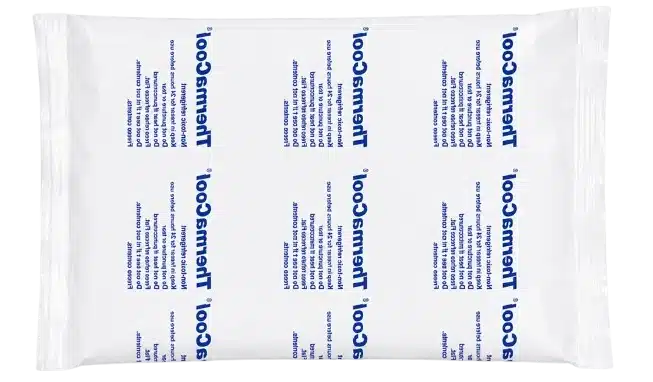
Gel packs are economical cooling elements for a range of temperature-controlled applications. Depending on the version, they can be used for standard cooling, food shipping, pharmaceutical logistics, diagnostics or frozen pack-outs.
Gel packs are particularly suitable when cost, availability, a choice of formats and ease of use are priorities. For more demanding temperature ranges or tighter temperature control, PCM or shape-retaining cooling elements may be suitable.
Typical applications:
food and fresh produce shipping
pharmaceutical and diagnostic shipments
small to medium parcel sizes
economical single-use or limited-reuse applications
standard pack-outs with specified cooling elements
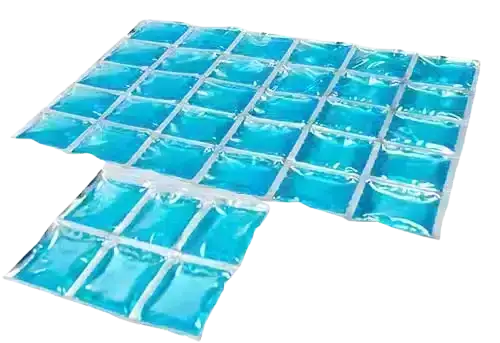
Flexible cooling mats suit pack-outs where conventional rigid cooling elements do not fit well. Their segmented or flexible design allows them to fit into available spaces, accommodate product geometries or provide cooling around the goods.
They can be particularly useful when space inside the insulated box is limited, the product format has specific requirements, or cooling elements need to be positioned around or alongside the payload. Suitability depends on the temperature range, pack-out, conditioning, payload and insulated box.
Typical applications:
pack-outs with limited space
flexible cooling element arrangements or cooling around the goods
small to medium insulated boxes
product geometries with particular space requirements
PCM cooling elements contain phase change materials with a defined melting point. During the phase change, they absorb or release heat, supporting targeted temperature control in passive insulated packaging.
PCM cooling elements are particularly relevant when tighter temperature control is needed or conventional water-based cooling elements are insufficient for the application. Examples include +2 to +8 °C, controlled room temperature, frozen applications and custom temperature requirements.
THERMOCON frozen coolant packs can be a logistically simpler alternative to dry ice for suitable frozen pack-outs. Unlike dry ice, they are not classified as dangerous goods and, depending on the application, can support temperature control in the range of -15 to -25 °C.
Suitability depends on the product, temperature range, pack-out, transport profile and duration. Each application should therefore be assessed to determine whether frozen coolant packs are a suitable alternative or whether a dry ice solution is still required.
Typical applications:
frozen shipping in the range of -15 to -25 °C
pharmaceutical and biotech products requiring frozen transport
The temperature range is often the most important starting point for selection. However, the target temperature alone is not enough: the entire system of insulated box, pack-out, payload, conditioning, duration and ambient temperature profile matters.
The right cooling element for your application
Start by choosing the transport temperature range you need. Then narrow down the design, the cooling medium and the usage concept.
Select transport temperature range
NOTE: The transport temperature range describes the target temperature of the goods — not the melting point or phase-change temperature of the cooling element. Suitability follows from the packaging system, the pack-out and the conditioning.
Narrow down design, cooling medium & use
Gel packs
Water-based and PCM gel packs for single-use shipping
Gel packs are the economical basis for single-use cold chains. They are available in different formats and nominal weights from 200 g to 680 g, allowing you to select a suitable option for the space inside the packaging. Available with a melting point of 0 °C for fresh and pharma shipments and −21 °C for frozen applications.
Water-based & PCM Available at 0 °C and −21 °C
Various formats Nominal weights 200–680 g
Single-use processes No return transport or cleaning
Segmented cooling pads
Flexible cooling mats for even, surface-wide temperature control
Segmented cooling pads can be laid around the payload or against the inner walls of the thermal box, giving even, surface-wide temperature control. The segmentation lets them adapt to different interiors without re-making individual elements.
Segmented & adaptable Fit around the interior and payload
Surface-wide temperature control Even heat absorption
Water-based Melting point 0 °C
Foam bricks
Dimensionally stable cooling elements for reproducible pack-outs
Foam bricks keep their shape throughout the shipping process, which makes them suited to standardised loadings that can be repeated and documented. Nominal weights from 250 g to 1,750 g cover everything from small parcels to large-volume pack-outs, with a melting point of 0 °C or −21 °C.
Dimensionally stable Reproducible pack-outs
0 °C and −21 °C Chilled and frozen applications
Single-use processes Standardised loading
Rigid-shell cooling elements
Robust reusable elements for every target temperature range
Rigid-shell cooling elements are designed for recurring processes with return, cleaning and pre-conditioning. They are the only design to cover all five melting points — 0 °C, +5 °C, +18 °C, +22 °C and −21 °C — and so the CRT ranges of +15 to +25 °C as well. Most of the 53 variants work with a defined phase change material.
All five melting points 0, +5, +18, +22 and −21 °C
Reusable Return and cleaning
Mostly PCM Defined phase change
Melting point
More filters (optional)
Cooling medium
Usage concept
0matching products
Matching cooling elements
The items shown are filtered by {pill}: {card}. Sample data – final values come from the product database.
Multiple selection possible: Tick every product you are interested in and request them all with a single inquiry.
Matching cooling elements — 97 variants
Select
Action
Gelpack Basic 200
14005
Gel packs
Single-use
Water-based
0 °C
200 g
190 × 100 × 15 mm
Gelpack Basic 300
14006
Gel packs
Single-use
Water-based
0 °C
300 g
200 × 150 × 12 mm
Gelpack Basic 400
14007
Gel packs
Single-use
Water-based
0 °C
400 g
200 × 150 × 20 mm
Gelpack Basic 460
12777
Gel packs
Single-use
Water-based
0 °C
460 g
190 × 150 × 22 mm
Gelpack Basic 500
14008
Gel packs
Single-use
Water-based
0 °C
500 g
200 × 150 × 25 mm
Gelpack Basic 680
14009
Gel packs
Single-use
Water-based
0 °C
680 g
200 × 150 × 35 mm
Gelpack Recycle 200
14130
Gel packs
Single-use
Water-based
0 °C
200 g
210 × 100 × 20 mm
Gelpack Recycle 300
14131
Gel packs
Single-use
Water-based
0 °C
300 g
210 × 150 × 12 mm
Gelpack Recycle 400
14132
Gel packs
Single-use
Water-based
0 °C
400 g
210 × 150 × 20 mm
Gelpack Recycle 460
14133
Gel packs
Single-use
Water-based
0 °C
460 g
210 × 150 × 22 mm
Gelpack Recycle 500
14134
Gel packs
Single-use
Water-based
0 °C
500 g
210 × 150 × 25 mm
Gelpack Recycle 680
14135
Gel packs
Single-use
Water-based
0 °C
680 g
210 × 150 × 35 mm
Gelpack Recycle 200 I PCM -21
14154
Gel packs
Single-use
PCM
−21 °C
200 g
210 × 100 × 20 mm
Gelpack Recycle 300 I PCM -21
14155
Gel packs
Single-use
PCM
−21 °C
300 g
210 × 150 × 12 mm
Gelpack Recycle 400 I PCM -21
14156
Gel packs
Single-use
PCM
−21 °C
400 g
210 × 150 × 20 mm
Gelpack Recycle 460 I PCM -21
14157
Gel packs
Single-use
PCM
−21 °C
460 g
210 × 150 × 22 mm
Gelpack Recycle 500 I PCM -21
14158
Gel packs
Single-use
PCM
−21 °C
500 g
210 × 150 × 25 mm
Gelpack Recycle 680 I PCM -21
14159
Gel packs
Single-use
PCM
−21 °C
680 g
210 × 150 × 35 mm
Gelpack Pro 200 I PCM -21
14052
Gel packs
Single-use
PCM
−21 °C
200 g
190 × 100 × 15 mm
Gelpack Pro 300 I PCM -21
14053
Gel packs
Single-use
PCM
−21 °C
300 g
200 × 150 × 12 mm
Gelpack Pro 400 I PCM -21
14054
Gel packs
Single-use
PCM
−21 °C
400 g
200 × 150 × 20 mm
Gelpack Pro 445 I PCM -21
14050
Gel packs
Single-use
PCM
−21 °C
445 g
220 × 150 × 10 mm
Gelpack Pro 460 I PCM -21
14055
Gel packs
Single-use
PCM
−21 °C
460 g
190 × 150 × 22 mm
Gelpack Pro 500 I PCM -21
14051
Gel packs
Single-use
PCM
−21 °C
500 g
155 × 150 × 25 mm
Gelpack Pro 300
14011
Gel packs
Single-use
Water-based
0 °C
300 g
200 × 150 × 12 mm
Gelpack Pro 400
14012
Gel packs
Single-use
Water-based
0 °C
400 g
200 × 150 × 20 mm
Gelpack Pro 460
14013
Gel packs
Single-use
Water-based
0 °C
460 g
190 × 150 × 22 mm
Gelpack Pro 500
14014
Gel packs
Single-use
Water-based
0 °C
500 g
200 × 150 × 25 mm
Gelpack Pro 680
14015
Gel packs
Single-use
Water-based
0 °C
680 g
200 × 150 × 35 mm
THERMOCON Foam Brick 250
14063
Foam bricks
Single-use
Water-based
0 °C
250 g
152 × 95 × 20 mm
THERMOCON Foam Brick 500
14061
Foam bricks
Single-use
Water-based
0 °C
500 g
195 × 130 × 21 mm
THERMOCON Foam Brick 520
14059
Foam bricks
Single-use
Water-based
0 °C
520 g
136 × 136 × 30 mm
THERMOCON Foam Brick 630
14057
Foam bricks
Single-use
Water-based
0 °C
630 g
177 × 102 × 39 mm
THERMOCON Foam Brick 680
14062
Foam bricks
Single-use
Water-based
0 °C
680 g
120 × 100 × 60 mm
THERMOCON Foam Brick 1100
14058
Foam bricks
Single-use
Water-based
0 °C
1100 g
280 × 190 × 26 mm
THERMOCON Foam Brick 1690
14060
Foam bricks
Single-use
Water-based
0 °C
1690 g
286 × 236 × 27 mm
TCFB 460 I PCM -21
14065
Foam bricks
Single-use
PCM
−21 °C
460 g
195 × 130 × 21 mm
TCFB 520 I PCM -21
14066
Foam bricks
Single-use
PCM
−21 °C
520 g
136 × 136 × 30 mm
TCFB 630 I PCM -21
14067
Foam bricks
Single-use
PCM
−21 °C
630 g
177 × 102 × 39 mm
TCFB 660 I PCM -21
14068
Foam bricks
Single-use
PCM
−21 °C
660 g
120 × 100 × 60 mm
TCFB 1300 I PCM -21
14064
Foam bricks
Single-use
PCM
−21 °C
1300 g
280 × 190 × 26 mm
TCFB 1750 I PCM -21
14069
Foam bricks
Single-use
PCM
−21 °C
1750 g
286 × 236 × 27 mm
Flexible cooling pads Small
14028
Segmented cooling pads
Single-use
Water-based
0 °C
75 g
150 × 130 × 10 mm
Flexible cooling pads Small
14029
Segmented cooling pads
Single-use
Water-based
0 °C
390 g
380 × 250 × 10 mm
HDPE Basic 200
12900
Rigid-shell cooling elements
Reusable
Water-based
0 °C
200 g
150 × 80 × 20 mm
HDPE Basic 400
12901
Rigid-shell cooling elements
Reusable
Water-based
0 °C
400 g
160 × 90 × 32 mm
HDPE Basic 750
12902
Rigid-shell cooling elements
Reusable
Water-based
0 °C
750 g
200 × 105 × 40 mm
TC HDPE Pro, 280x190x26mm
14002
Rigid-shell cooling elements
Reusable
Water-based
0 °C
1260 g
280 × 190 × 26 mm
TC PCM 5.5, 280x190x26mm
14000
Rigid-shell cooling elements
Reusable
PCM
+5 °C
1000 g
280 × 190 × 26 mm
TC PCM 18, 280x190x26mm
14001
Rigid-shell cooling elements
Reusable
PCM
+18 °C
1000 g
280 × 190 × 26 mm
TC PCM 22, 280x190x26mm
14044
Rigid-shell cooling elements
Reusable
PCM
+22 °C
1000 g
280 × 190 × 26 mm
TC PCM -21, 280x190x26mm
14003
Rigid-shell cooling elements
Reusable
PCM
−21 °C
1410 g
280 × 190 × 26 mm
TC HDPE Pro, 285x235x26mm
14141
Rigid-shell cooling elements
Reusable
Water-based
0 °C
1360 g
285 × 235 × 26 mm
TC PCM 5.5, 285x235x26mm
14142
Rigid-shell cooling elements
Reusable
PCM
+5 °C
1080 g
285 × 235 × 26 mm
TC PCM 18, 285x235x26mm
14143
Rigid-shell cooling elements
Reusable
PCM
+18 °C
1080 g
285 × 235 × 26 mm
TC PCM 22, 285x235x26mm
14144
Rigid-shell cooling elements
Reusable
PCM
+22 °C
1080 g
285 × 235 × 26 mm
TC PCM -21, 285x235x26mm
14145
Rigid-shell cooling elements
Reusable
PCM
−21 °C
1550 g
285 × 235 × 26 mm
TC HDPE Pro, 266x266x26mm
14036
Rigid-shell cooling elements
Reusable
Water-based
0 °C
1450 g
266 × 266 × 26 mm
TC PCM 5.5, 266x266x26mm
14037
Rigid-shell cooling elements
Reusable
PCM
+5 °C
1160 g
266 × 266 × 26 mm
TC PCM 18, 266x266x26mm
14038
Rigid-shell cooling elements
Reusable
PCM
+18 °C
1160 g
266 × 266 × 26 mm
TC PCM 22, 266x266x26mm
14039
Rigid-shell cooling elements
Reusable
PCM
+22 °C
1160 g
266 × 266 × 26 mm
TC PCM -21, 266x266x26mm
14035
Rigid-shell cooling elements
Reusable
PCM
−21 °C
1640 g
266 × 266 × 26 mm
TC HDPE Pro, 270x182x26mm
14090
Rigid-shell cooling elements
Reusable
Water-based
0 °C
1000 g
270 × 182 × 26 mm
TC PCM 5.5, 270x182x26mm
14091
Rigid-shell cooling elements
Reusable
PCM
+5 °C
780 g
270 × 182 × 26 mm
TC PCM 18, 270x182x26mm
14092
Rigid-shell cooling elements
Reusable
PCM
+18 °C
780 g
270 × 182 × 26 mm
TC PCM 22, 270x182x26mm
14093
Rigid-shell cooling elements
Reusable
PCM
+22 °C
780 g
270 × 182 × 26 mm
TC PCM -21, 270x182x26mm
14094
Rigid-shell cooling elements
Reusable
PCM
−21 °C
1080 g
270 × 182 × 26 mm
TC HDPE Pro, 270x182x38mm
14095
Rigid-shell cooling elements
Reusable
Water-based
0 °C
1200 g
270 × 182 × 38 mm
TC PCM 5.5, 270x182x38mm
14096
Rigid-shell cooling elements
Reusable
PCM
+5 °C
960 g
270 × 182 × 38 mm
TC PCM 18, 270x182x38mm
14097
Rigid-shell cooling elements
Reusable
PCM
+18 °C
960 g
270 × 182 × 38 mm
TC PCM 22, 270x182x38mm
14098
Rigid-shell cooling elements
Reusable
PCM
+22 °C
960 g
270 × 182 × 38 mm
TC PCM -21, 270x182x38mm
14099
Rigid-shell cooling elements
Reusable
PCM
−21 °C
1410 g
270 × 182 × 38 mm
TC HDPE Pro, 266x266x36mm
14100
Rigid-shell cooling elements
Reusable
Water-based
0 °C
1750 g
266 × 266 × 36 mm
TC PCM 5.5, 266x266x36mm
14101
Rigid-shell cooling elements
Reusable
PCM
+5 °C
1390 g
266 × 266 × 36 mm
TC PCM 18, 266x266x36mm
14102
Rigid-shell cooling elements
Reusable
PCM
+18 °C
1390 g
266 × 266 × 36 mm
TC PCM 22, 266x266x36mm
14103
Rigid-shell cooling elements
Reusable
PCM
+22 °C
1390 g
266 × 266 × 36 mm
TC PCM -21, 266x266x36mm
14104
Rigid-shell cooling elements
Reusable
PCM
−21 °C
2040 g
266 × 266 × 36 mm
TC HDPE Pro, 342x270x26mm
14105
Rigid-shell cooling elements
Reusable
Water-based
0 °C
2000 g
342 × 270 × 26 mm
TC PCM 5.5, 342x270x26mm
14106
Rigid-shell cooling elements
Reusable
PCM
+5 °C
1620 g
342 × 270 × 26 mm
TC PCM 18, 342x270x26mm
14107
Rigid-shell cooling elements
Reusable
PCM
+18 °C
1620 g
342 × 270 × 26 mm
TC PCM 22, 342x270x26mm
14108
Rigid-shell cooling elements
Reusable
PCM
+22 °C
1620 g
342 × 270 × 26 mm
TC PCM -21, 342x270x26mm
14109
Rigid-shell cooling elements
Reusable
PCM
−21 °C
2320 g
342 × 270 × 26 mm
TC HDPE Pro, 342x342x26mm
14110
Rigid-shell cooling elements
Reusable
Water-based
0 °C
2300 g
342 × 342 × 26 mm
TC PCM 5.5, 342x342x26mm
14111
Rigid-shell cooling elements
Reusable
PCM
+5 °C
2085 g
342 × 342 × 26 mm
TC PCM 18, 342x342x26mm
14112
Rigid-shell cooling elements
Reusable
PCM
+18 °C
2085 g
342 × 342 × 26 mm
TC PCM 22, 342x342x26mm
14113
Rigid-shell cooling elements
Reusable
PCM
+22 °C
2085 g
342 × 342 × 26 mm
TC PCM -21, 342x342x26mm
14114
Rigid-shell cooling elements
Reusable
PCM
−21 °C
2780 g
342 × 342 × 26 mm
TC HDPE Pro, 442x342x26mm
14115
Rigid-shell cooling elements
Reusable
Water-based
0 °C
3200 g
442 × 342 × 26 mm
TC PCM 5.5, 442x342x26mm
14116
Rigid-shell cooling elements
Reusable
PCM
+5 °C
2950 g
442 × 342 × 26 mm
TC PCM 18, 442x342x26mm
14117
Rigid-shell cooling elements
Reusable
PCM
+18 °C
2950 g
442 × 342 × 26 mm
TC PCM 22, 442x342x26mm
14118
Rigid-shell cooling elements
Reusable
PCM
+22 °C
2950 g
442 × 342 × 26 mm
TC PCM -21, 442x342x26mm
14119
Rigid-shell cooling elements
Reusable
PCM
−21 °C
4350 g
442 × 342 × 26 mm
TC HDPE Pro, 442x442x26mm
14120
Rigid-shell cooling elements
Reusable
Water-based
0 °C
4750 g
442 × 442 × 26 mm
TC PCM 5.5, 442x442x26mm
14121
Rigid-shell cooling elements
Reusable
PCM
+5 °C
3800 g
442 × 442 × 26 mm
TC PCM 18, 442x442x26mm
14122
Rigid-shell cooling elements
Reusable
PCM
+18 °C
3800 g
442 × 442 × 26 mm
TC PCM 22, 442x442x26mm
14123
Rigid-shell cooling elements
Reusable
PCM
+22 °C
3800 g
442 × 442 × 26 mm
TC PCM -21, 442x442x26mm
14124
Rigid-shell cooling elements
Reusable
PCM
−21 °C
5500 g
442 × 442 × 26 mm
No items match this selection. Please adjust the filters.
You can request several products together.
Custom temperature ranges
Not every application fits a standard range. Some diagnostic, life science, pharmaceutical, laboratory or industrial applications may require custom temperature ranges.
THERMOCON can assess whether an existing PCM, an adjusted melting point, a different cooling element geometry or a custom climate chamber test would be appropriate.
Custom melting points
Standard melting points may be insufficient for specific products or processes. THERMOCON can assess whether custom PCM melting points, adapted cooling element geometries or application-specific tests would be appropriate.
PCM cooling elements use the phase change of a material. Around its melting point, the material can absorb or release heat. In appropriately designed insulated packaging, PCM elements can therefore help support defined temperature ranges more precisely.
Choosing the melting point is crucial. A PCM element is not automatically better than a conventional cooling element. It must suit the temperature range, product, pack-out, insulated box and ambient temperature profile.
-21 °C cooling elements
Cooling elements with a melting point around -21 °C can be used for frozen applications and suitable pack-outs in the range of -15 to -25 °C.
Unlike dry ice, THERMOCON frozen coolant packs are not classified as dangerous goods. They can therefore be a logistically simpler alternative for suitable frozen pack-outs. Suitability depends on the product, pack-out, transport profile, duration and temperature requirements.
Typical applications:
frozen shipping
pharmaceutical and biotech products requiring frozen conditions
diagnostics and laboratories
industrial samples
pack-outs replacing dry ice, where thermally suitable
Cooling elements with a melting point around 0 °C are often used for conventional cooling applications. They can be economical and versatile, but their use in the pack-out must be assessed carefully for sensitive products.
For +2 to +8 °C applications in particular, check that spacing, conditioning and the pack-out are sufficient to avoid excessively low product temperatures during transport.
PCM +5 °C is particularly relevant for +2 to +8 °C applications. The material operates around its melting point of approximately +5 °C: it absorbs or releases heat and can therefore support temperature control in appropriately designed cold-chain pack-outs.
In many applications, +5 °C PCM elements can support all-season pack-outs using the same cooling element configuration in summer and winter. This requires an appropriately designed and tested pack-out.
PCM +18 °C can be relevant for controlled room temperature applications. It can help buffer temperature peaks and support the specified range in appropriately designed CRT pack-outs.
Whether +18 °C or another melting point is more suitable depends on the target temperature range, ambient temperature profiles, product stability and pack-out.
Typical applications:
CRT transport
protection from cold and heat
pharmaceutical and diagnostic products at room temperature
PCM +22 °C can be useful for CRT applications requiring a phase-change temperature closer to the upper end of the room temperature range. It suits pack-outs where protection against both cooling and overheating needs to be considered.
Suitability should be assessed against the product specification, target temperature range, pack-out, ambient temperature profile and duration.
Typical applications:
controlled room temperature
pharmaceutical and life science products
applications requiring a higher phase-change temperature within the room temperature range
The thermal performance of a cooling element cannot be assessed in isolation. What matters is how it is used in the Pack-out . The number, positioning and conditioning of elements, their distance from the product, the insulated box, payload and ambient temperature profile all influence temperature control.
When selecting a cooling element, always assess:
Parameter
Effect on thermal performance
Conditioning
Starting temperature and preparation of the cooling element
Quantity
available thermal mass
Positioning
Heat flow, distance from the product and freezing risk
Payload
The mass, heat capacity and geometry of the goods influence thermal behaviour
Insulated box
Insulation performance, usable volume, wall thickness and material
Duration
essential for specifying the insulated box and quantity of coolant
Ambient temperature profile
Summer, winter, mixed or customer-specific profile
Packing process
Repeatability and susceptibility to shipping errors
Dry ice is one of the most widely used coolants for passive deep-frozen packaging. It offers very high energy density and is a proven solution for many frozen shipments. Depending on the application, transport route and regulatory environment, additional requirements for labelling, declarations, ventilation and handling may apply. In certain cases, it is therefore worth assessing whether PCM-21 frozen coolant packs are a suitable alternative — for example, to reduce restrictions affecting air or road transport.
A custom solution may be appropriate when standard formats or melting points do not suit the application. Reasons can include specific product geometries, different temperature ranges, special sizes or bespoke packaging solutions.
THERMOCON develops and supplies custom cooling elements and PCM solutions with defined melting points for special temperature requirements.
Proof point
Customer benefit
broad range of cooling elements
Choice of gel packs, Foam Bricks, hard-shell packs, flexible cooling mats and PCM
PCM expertise
defined melting points for cold, CRT, frozen and special temperature applications
Pack-out experience
Assessment of positioning, conditioning and payload
Climate chamber tests
Testing under defined ambient temperature profiles
Insulated box portfolio
Cooling elements can be combined with suitable insulated boxes
customisation
Geometry, melting point and pack-out can be adapted to requirements
Services
thermal development, climate chamber testing, digital twins and prototyping
Which cooling element is suitable for +2 to +8 °C?
This depends on the product, pack-out, insulated box, duration and ambient temperature profile. Depending on the application, gel packs, Foam Bricks, hard-shell packs, flexible cooling mats or PCM +5 °C may be suitable for +2 to +8 °C. For sensitive products, the risk of freezing should be assessed in the pack-out.
What is the difference between a gel pack, a Foam Brick and a PCM cooling element?
Gel packs are economical cooling elements available in different formats. Foam Bricks have a shape-retaining foam core and allow particularly precise positioning. PCM cooling elements contain phase change materials with a defined melting point and can therefore provide more targeted support for specific temperature ranges.
When are flexible cooling mats useful?
Flexible cooling mats are useful when rigid cooling elements do not fit the pack-out well or when available gaps need to be used more effectively. They can offer advantages where space is limited, product geometries are unusual or flexible cooling arrangements are needed. Suitability depends on the pack-out, temperature range, conditioning and insulated box.
When are PCM cooling elements useful?
PCM cooling elements are useful when a defined melting point matters for temperature control. Typical applications include +2 to +8 °C, CRT, frozen pack-outs and special temperature requirements. Suitability depends on the complete pack-out and test conditions.
Can THERMOCON cooling elements replace dry ice?
For suitable frozen pack-outs, THERMOCON frozen coolant packs can be a logistically simpler alternative to dry ice. Suitability for a particular shipment depends on the product, target temperature range, duration, pack-out and transport profile.
Are cooling elements alone sufficient for a GDP-compliant transport process?
No. Cooling elements can be part of a documented GDP-compliant transport process. What matters is the complete process: packaging system, pack-out, conditioning, route, monitoring, SOPs and customer approval.
Can cooling elements be customised?
Yes. Depending on the requirements, the cooling element size, format, film specification, hard shell or PCM melting point can be assessed individually. Whether a modification is appropriate depends on order volume, application, temperature range and packing process.
Support with selection and specification
Do you already know your temperature range, duration, payload or insulated box? THERMOCON can help select suitable cooling elements, assess the pack-out and review custom temperature requirements.
You are currently viewing a placeholder content from Vimeo. To access the actual content, click the button below. Please note that doing so will share data with third-party providers.
You are currently viewing a placeholder content from YouTube. To access the actual content, click the button below. Please note that doing so will share data with third-party providers.
You are currently viewing a placeholder content from Mailchimp. To access the actual content, click the button below. Please note that doing so will share data with third-party providers.
You are currently viewing a placeholder content from Turnstile. To access the actual content, click the button below. Please note that doing so will share data with third-party providers.